


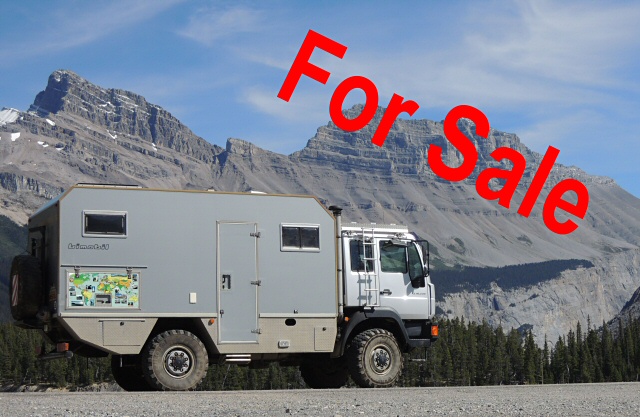
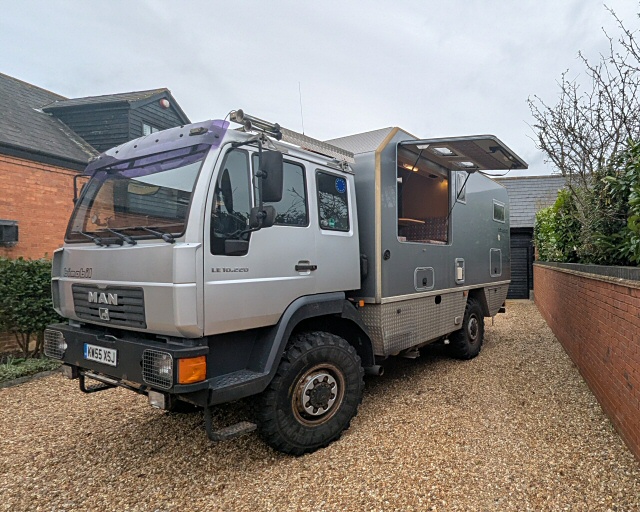
My 2005 MAN Bimobil EX480 was sold on Expeditionmeister in 2025.
Because Expeditionmeister only allows a limited amount of text to describe your vehicle I have added a more detailed description below.
Background
I have been driving overland trucks for the last 25 years and I bought this Bimobil EX480 used from Bimobil back in 2008 after I sold the Unimog U1300 truck I built in 2000. I have written extensively on choosing an overland truck In my view this is one of the best commercially built production overland truck available, it is the right compromise in equipment and price and as a result it is still being produced in a similar format 20 years later. This is not a fancy, gimmick laden, custom built luxury home on wheels, this is what you need for a safe reliable overland journey that you can afford to buy and to maintain. The few features that Bimobil didn't’t add in 2008 I have added over the years.
Base Vehicle
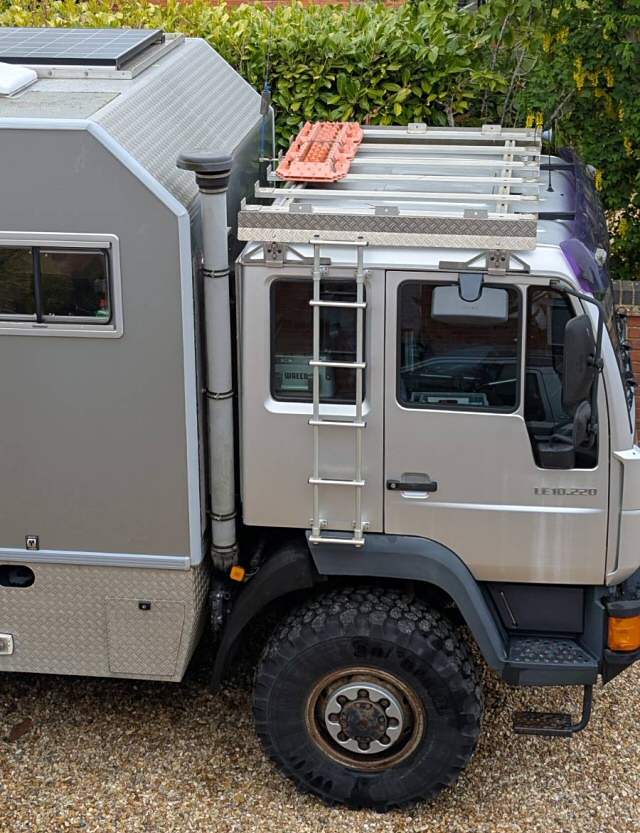
My Bimobil EX480 is based on a 2005 MAN LE 10.220 4X4 BB chassis with a Euro 3 MAN D0836LFL02 engine of 6871 cc producing 165 kW (220 HP). The vehicle was originally rated at 10,000 kg (Hence the 10.220) but was legally down rated to 7,490 kg in Germany and subsequently registered as a “Motor Caravan” “Private HGV”at 7,490 kg in the UK. It can be driven with a UK C1 licence which you may well have if you passed your test before 1997.
The vehicle has very little electronics (just a few flash codes when you plug in a cable with a push button and bulb, included) It does not have a catalytic converter and does not use AdBlue. This means you are more likely to be able to fix it yourself or get it fixed in Third World countries.
It has a new (Feb. 2025) MOT.
The gearbox is manual with six forward and one reverse gear which normally drives the rear wheels. There are switches to engage low ratio (effectively giving you two lower gears) as well as four wheel drive and separate front and rear diff-lock. It also has an automatic exhaust brake Jake brake) that saves wear and fade on the conventional brakes when descending long hills.
The vehicle is fitted with cruise control, cab air conditioning a Webasto diesel cab heater (very rarely used) and a reversing camera system with both a high and low camera.
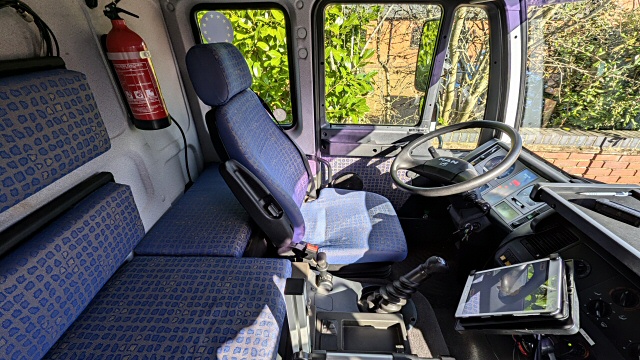
The cab is extended (i.e. there is extra space behind the driver and codriver, but it does not have two rows of seats (Crew Cab) this gives you improved vision at junctions and extra space for stowing gear etc.
Note this vehicle currently has two seats fitted with seat belts but it is possible to add an extra legal seat in the cab for well under £2000. Both exisating cab seats have air suspension and adjustable lumbar support.
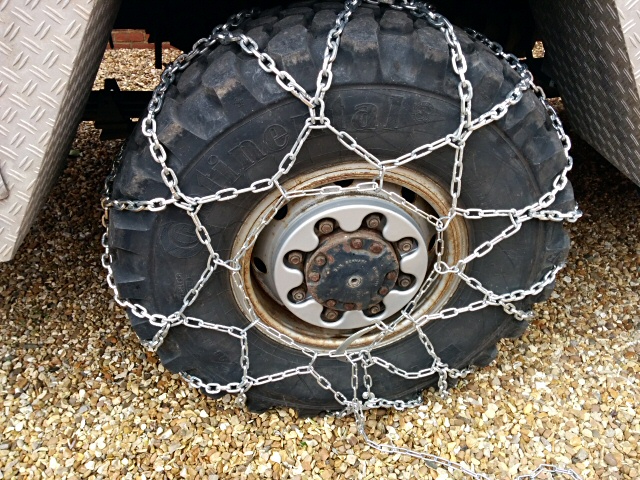
The vehicle is fitted with 5 off 365/80R20 Continental MPT 81 TL tyres, all with around 15mm of tread, so ready for a major trip. The two rear tyres can be fitted with snow chains, included.
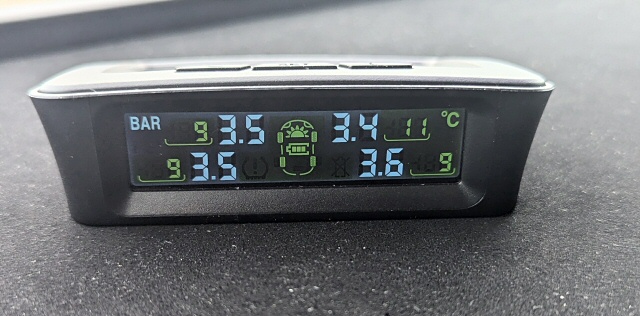
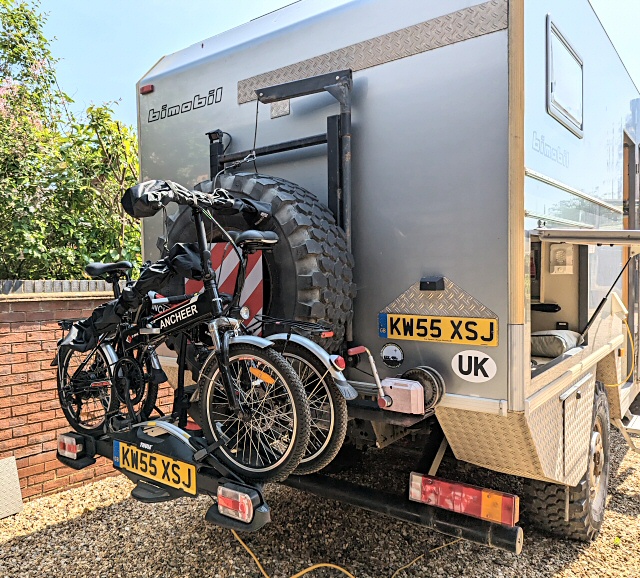
There is an after market TPS (Tyre Pressure Monitoring System) to warn of low or high tyre pressure. The spare tyre is mounted on the rear (not underneath) with a hand operated crane. There is a NATO hitch and rigid tow bar as well as a 50mm tow ball to mount a bike carrier for two bikes (the carrier and bikes are not included).
There is a Garmin GLO GPS and GLONASS receiver with Bluetooth output (this can be linked to a tablet or smart phone to provide faster and more precise positioning, whilst allowing you to position your navigation tablet in a good viewing position.) There is an articulated stand to hold a tablet for navigation (tablet is not included).
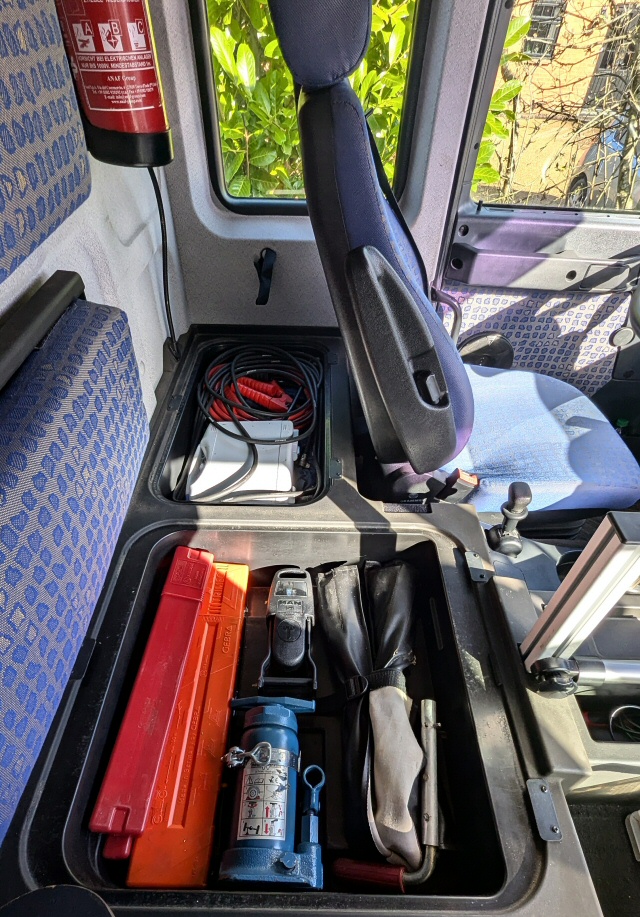
There is storage behind the driver’s seat for a tow rope, bridle, shackles, two hydraulic jacks (you need two), tyre inflation hose with gauge (connects to the trucks air reservoir to allow you to re-inflate after you have lowered tyre pressure for soft sand etc.) The compressor freezer (see below) can also be mounted and operated behind the codriver’s seat.
There is a roof rack with a ladder for access to the cab roof with two plastic "sand mats" that have never been used for this truck, but they can be helpful for others.
Fuel Tanks
The truck has two lockable diesel tanks, the main tank of 350 litres supplies the engine (via an water separator filter) and the heating system. The fuel gauge shows the contents of this tank. Based on my fuel consumption over the last ten years this gives a very safe range of 1500km from this tank alone (without any danger of nearly emptying the tank, you don’t want to do that).
The second tank holds 150 litres for “emergencies” and is not directly connect to anything. To use the contents of this tank fuel must be pumped from it to the main tank with an external 24 volt fuel pump (Included). This is a time consuming and slightly messy procedure, but far better than being stuck without fuel. The theoretical maximum range of the truck with both tanks full and careful driving is about 2,500km.
The Habitation Unit
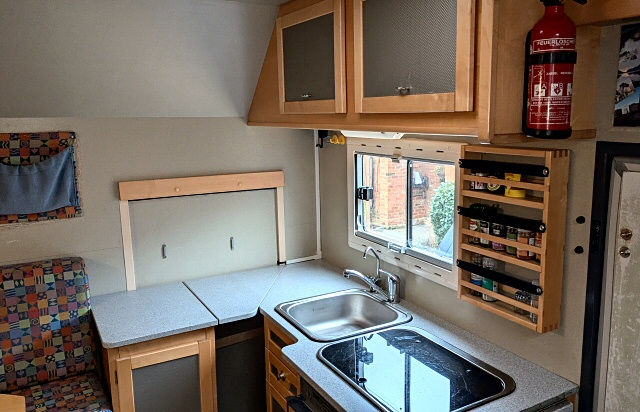
The habitation unit as designed by Bimobil is clean, simple and beautifully built with their trademark spice rack and large opening hatch.
The sleeping Area
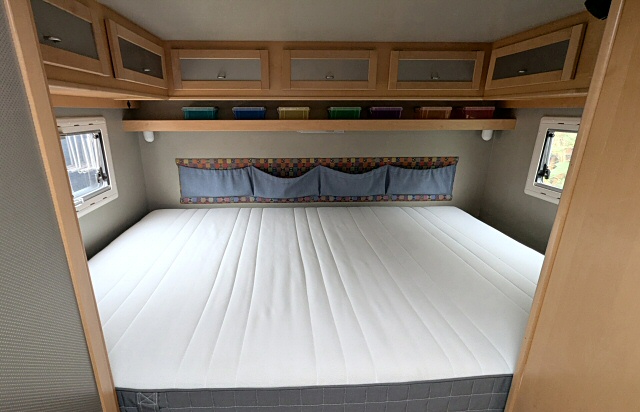
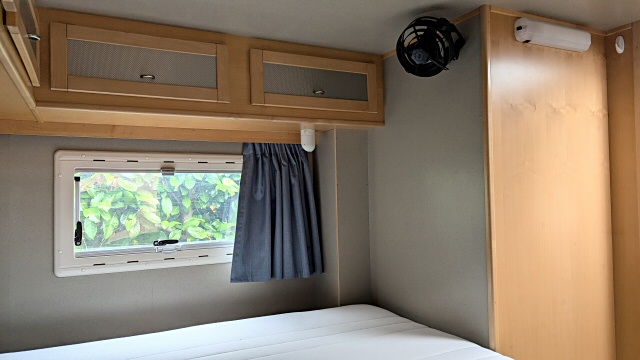
There is a rear transverse permanent Froil System bed with a standard European double sized Ikea mattress. There are LED reading lights at each end (meaning you can sleep either way round which can be important if you are unable to find somewhere level to park.) There are seven overhead lockers and a rear shelf for smaller items. Importantly there is sufficient room to sit up in bed and drink your morning tea or whatever else you want to do.
The blown air heating system blows air under the mattress to avoid condensation and there is an added marine fan over the bed.
There are two opening Seitz/Dometic windows with integral fly screens and blackout blinds one at each end of the bed. There is no skylight over the bed (that’s a good thing!)
Shower/Toilet Area
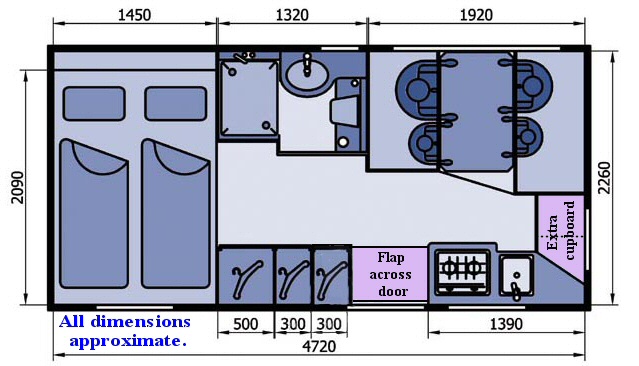
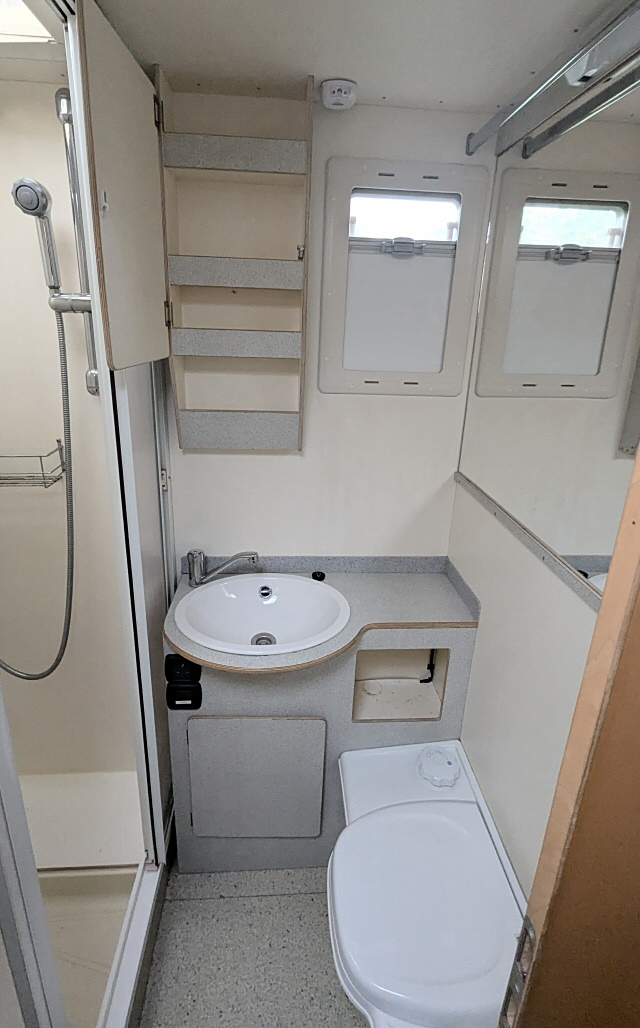
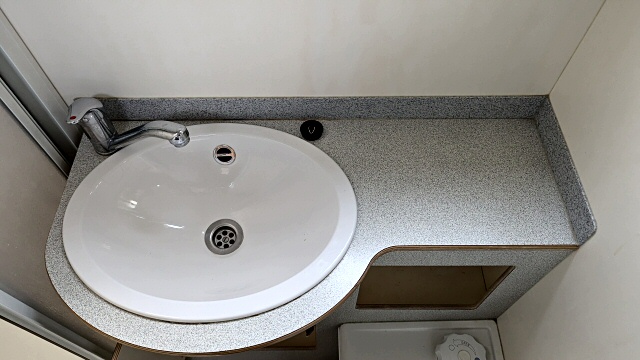
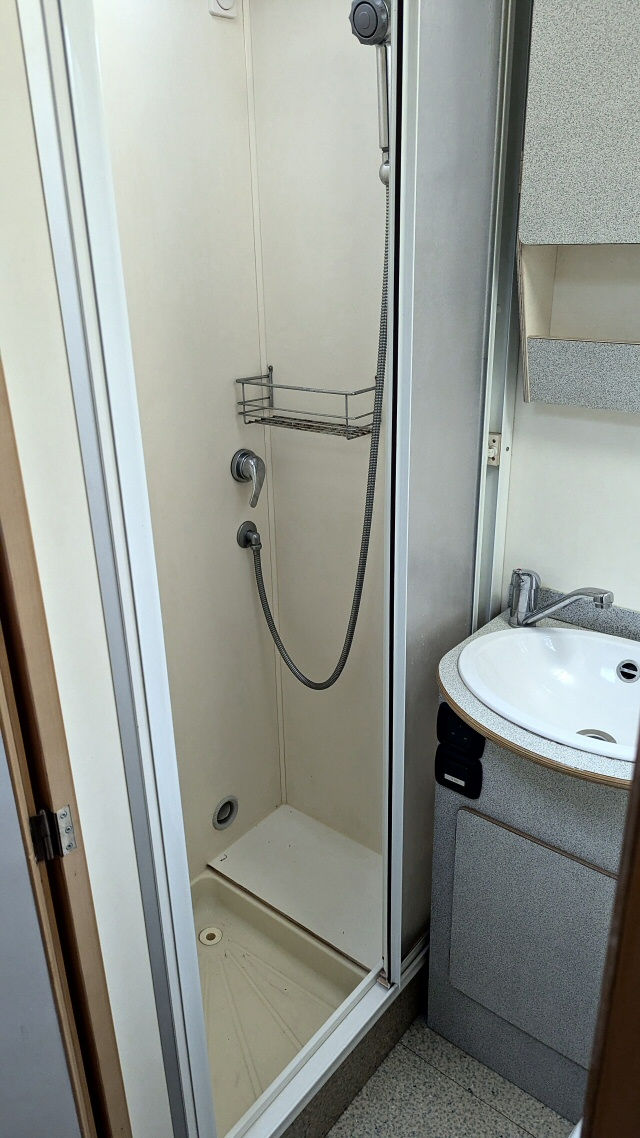
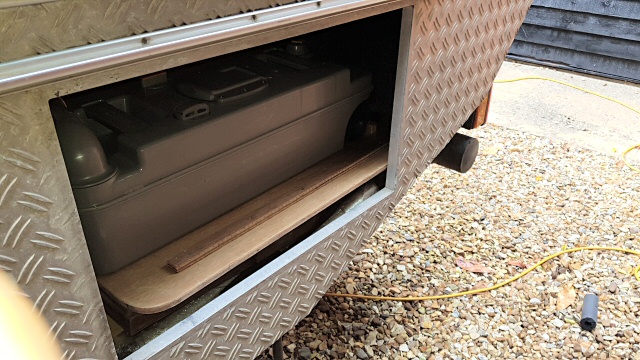
Bimobil’s shower and toilet arrangement is a model of simple functionality with a Thetford C4 Cassette toilet with a PIR controlled SOG unit that extracts air via the cassette to avoid odour inside the vehicle and allowing you not to use chemicals if you wish. My EX480 is fitted with two 20 litre wheeled cassettes. There is a dedicated outside storage locker to hold the second cassette. In many cases toilet capacity is the limiting factor in urban wild camping, two cassettes doubles the time you can spend. The toilet area has multiple storage compartments above and below the wash basin.
The separate shower cubical has a three pane sliding shower screen, a roof ventilation hatch and a wall mounted soap and shampoo rack. With the truck’s water capacity and heating system two people can have short back to back showers without problem.
Because the EX480 is fitted with an in-board grey water tank (with heating) the shower has a grey water pump with a switch in the shower cubical.
Wardrobe and Storage Unit
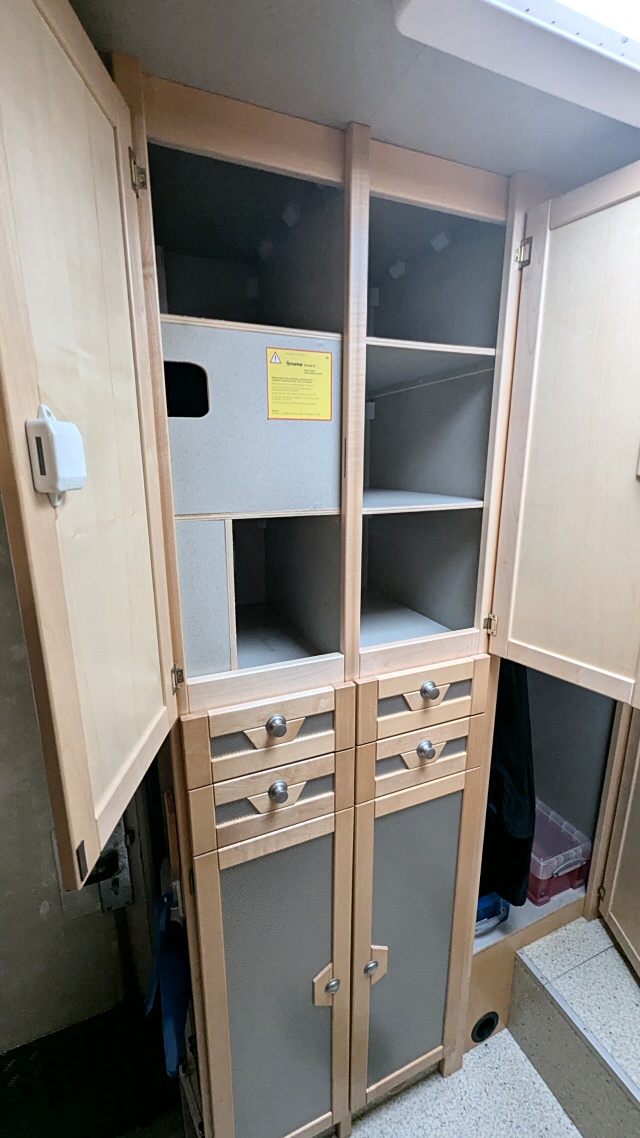
Clothes storage is provided by four cupboards enclosing 10 shelves, a wardrobe and four draws.
Dining Area
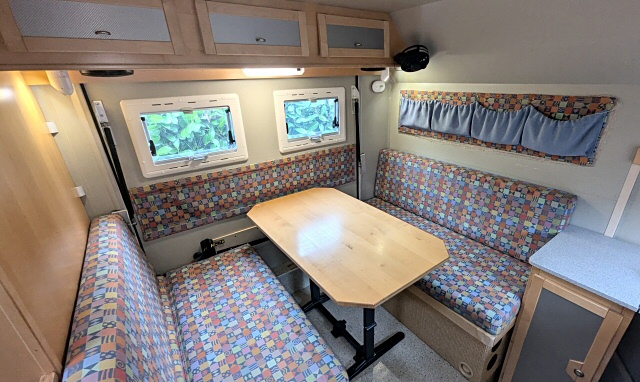
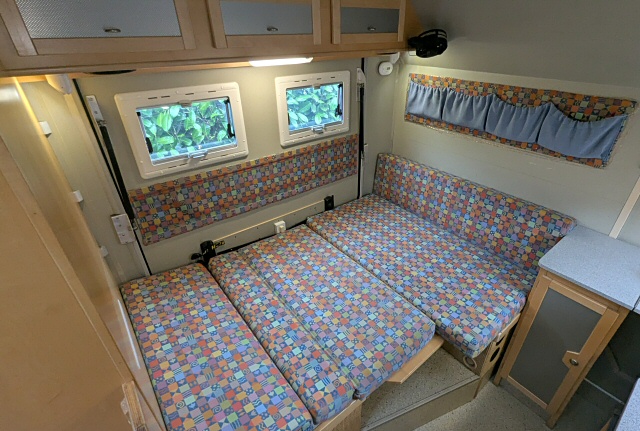
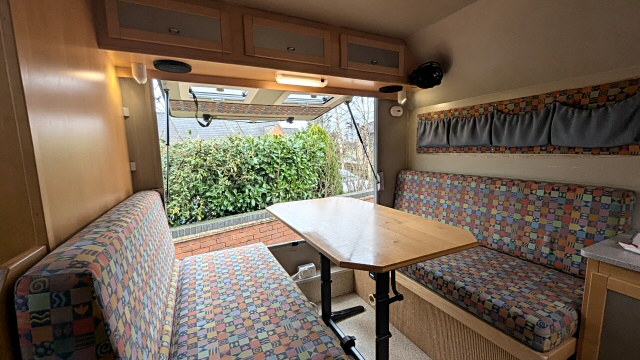
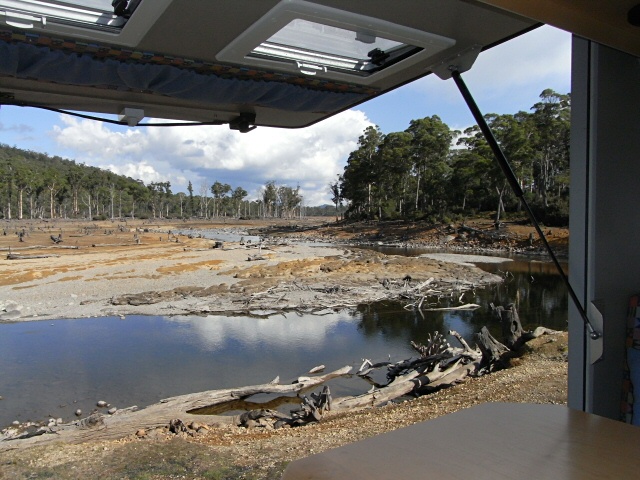
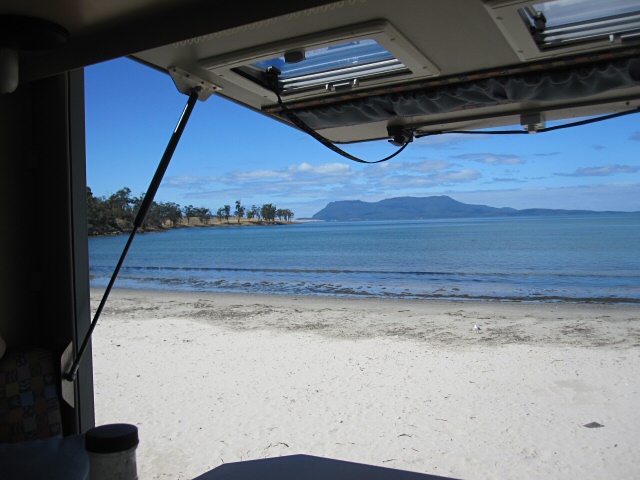
The dining area has two opposing bench seats and an adjustable height collapsible wooden table with Bimobil’s signature hatch that open upwards to give a panoramic “open air” view. Four can eat easily in this area, six at a pinch.
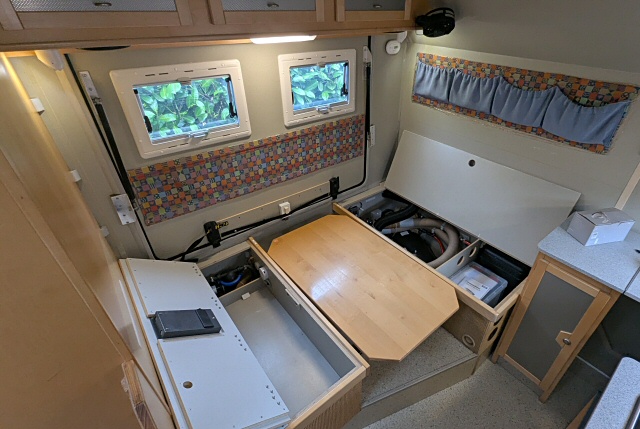
The table can be lowered and the bench seat cushions rearranged to form a day bed (with great views out the hatch) This bed could be used by a child to sleep on. There are LED reading lights and LED general lights in this area as well as a second marine fan.
Above the dining table are three additional lockers.
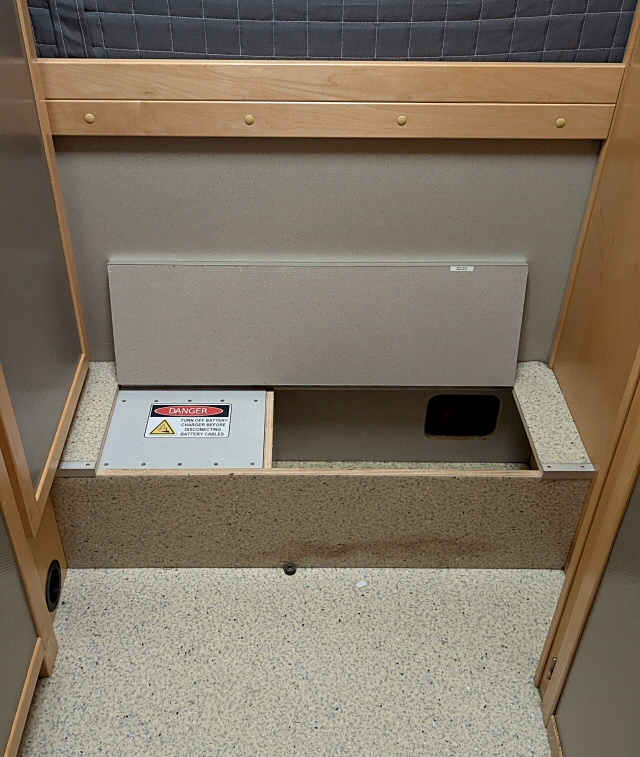
The area under the rear seat contains the heated grey water tank and a large locked semi-secure locker that can be used to store computers and other bulky valuable items. There are two other hidden secure “safes” one inside and one outside the habitation unit.
The front seat contains the heating system and documentation library.
The Kitchen
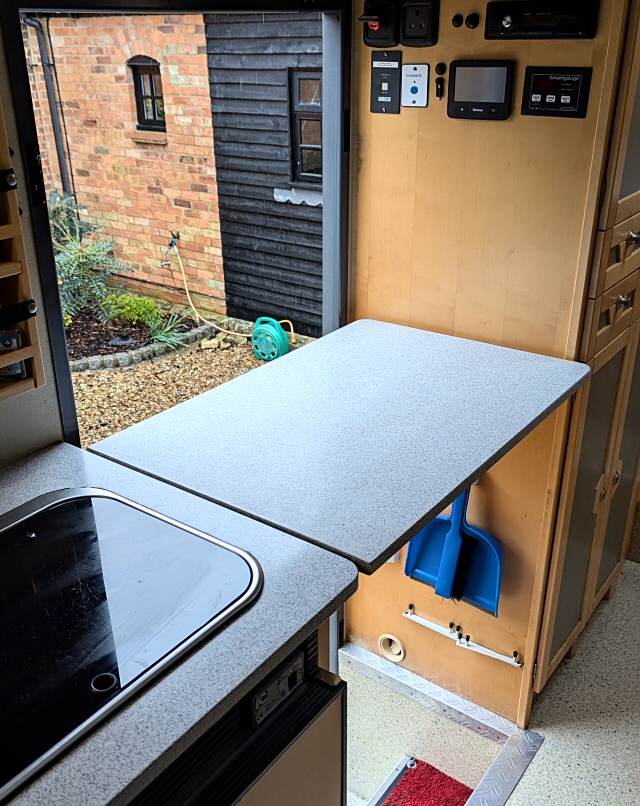
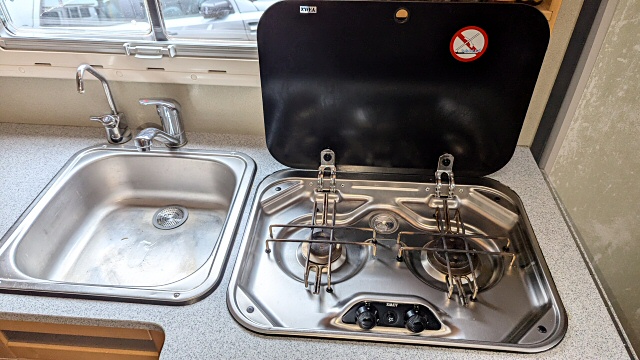
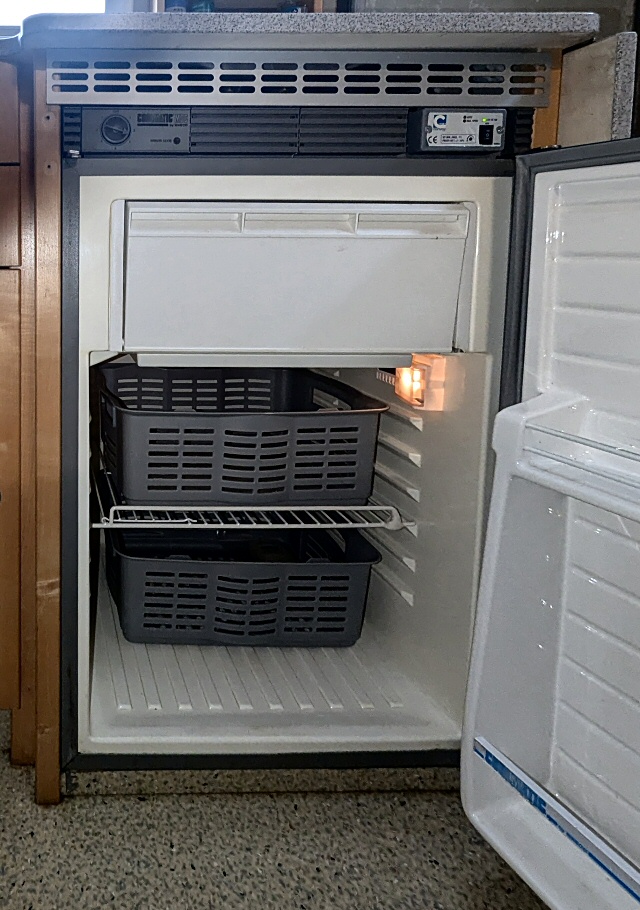
The original Bimobil kitchen had a two ring gas burner, a sink, a 110 litre compressor fridge, a spice rack, three under sink storage areas and two over sink lockers. When I purchased the vehicle I got Bimobil to add a second cupboard unit with additional work surface and a lift up work surface flap across the door. This more than doubled the work surface area.
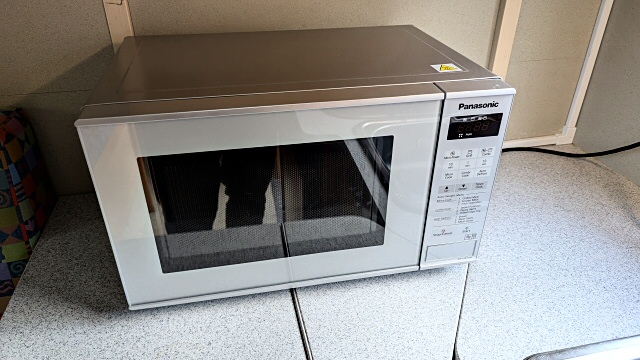
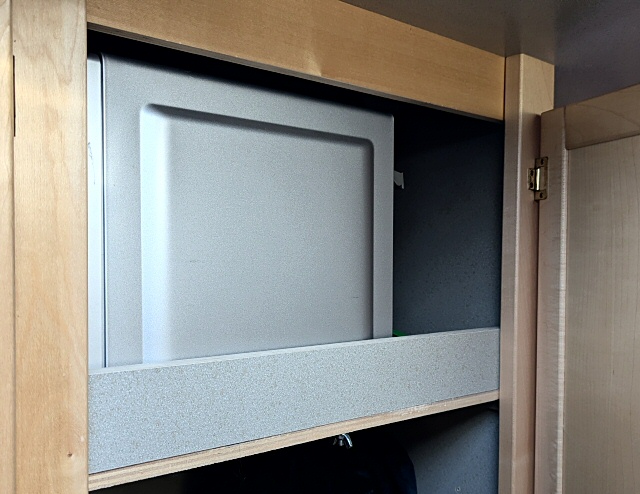
There is a Panasonic Microwave (Model NN-K181MM) that is stored in a custom shelf above the wardrobe, but to be honest since we discovered the Ninja Speedi 10-in-1 Rapid Cooker and Air Fryer (not included) with have hardly used the microwave!
Cab to Body Access
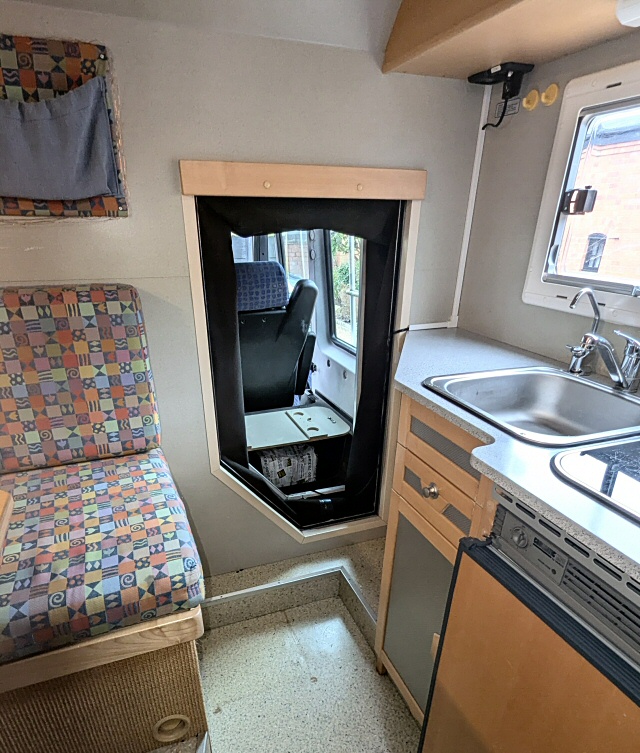
There is a detachable flexible rubber tunnel that provides emergency access from the body to the cab. It can only be used from the back to the front. To use it the additional kitchen cupboard must be moved out of the way (this involves two wing nuts) and the panel blocking the tunnel must be lifted inwards into the back. You then have to clamber into the cab behind the codriver’s seat (and over the freezer if fitted). I have only ever used it once in earnest when a black bear refused to go away!
In the very unusual event of having to tilt the cab to gain access to the engine (it has a hydraulic tilt mechanism) the flexible tunnel has to be disconnected from the cab (with half a dozen thumb nuts).
Access to the Body
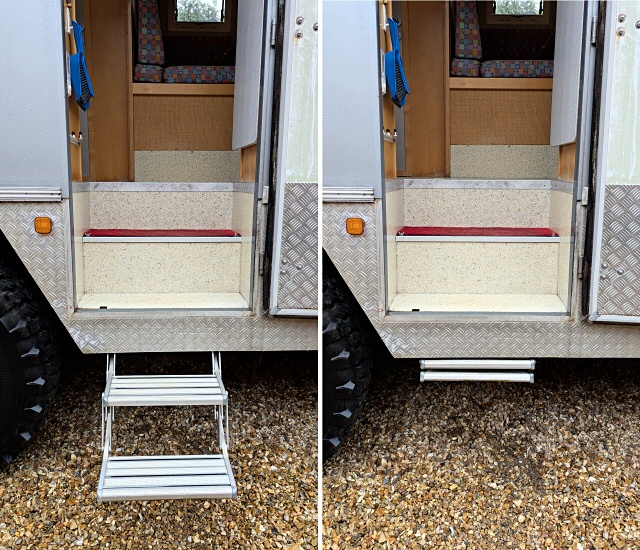
The Bimobil EX480 has the most sensible and simple access door of any large truck camper I have seen. Rather than a complex external pull out platform or ladder the EX480 has a simple two steps inside and an electrically operated two steps outside.
Roof Vents
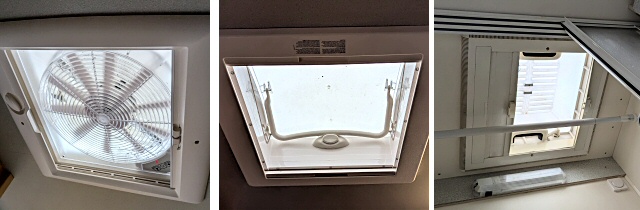
The Bimobil EX480 has three roof vents. One in the shower, one in the central corridor (a Mini Heki Plus) and the third over the hob (a Thule Omnivent Roof light) The extractor fan in the Omnivent was replaced in 2024.
Electrics
The truck runs on a 24 volt system whilst the habitation unit uses 12 volts.
The truck has two large 12 volt batteries (T5 075 Bosch Battery 12V 145Ah Type 627SHD Zero Maintenance) that were last replaced in 2023.
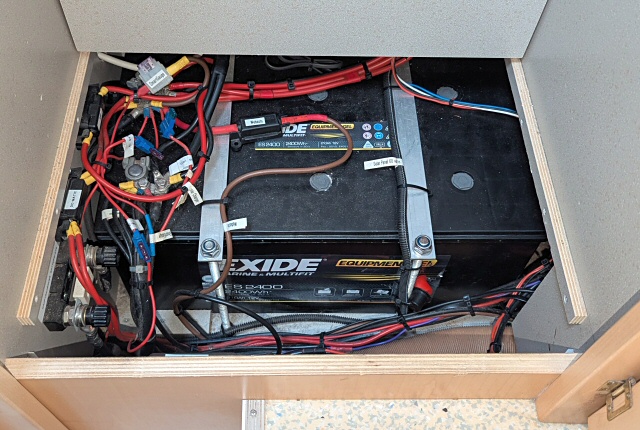
The habitation unit has a single ES2400 Exide G210 Gel Leisure Battery 210Ah Zero Maintenance battery that was last replaced in 2017. This battery is still in good condition and on past form I expect it to last several more years.
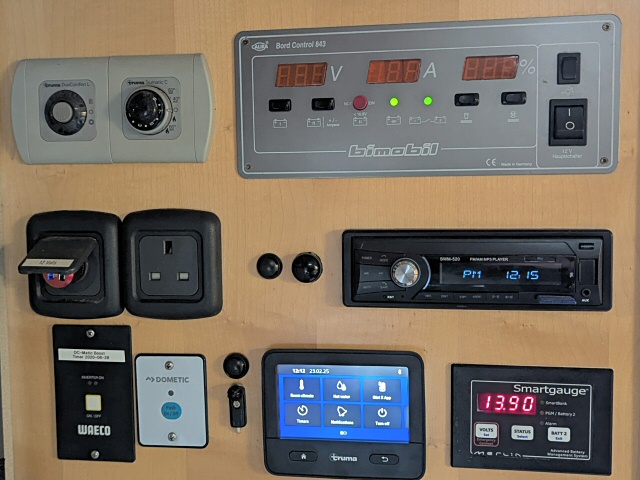
The leisure battery is charged from the vehicle battery by a bidirectional battery to battery charger (Calira DC-Matic 12V/24V Up-Down-Converter) when driving and if needed manually by push button that transfers around 20Ah from the vehicle battery to the leisure battery over an hour. (There is a spare Calira DC-Matic included)
Because this B-to-B converter is bidirectional and because this vehicle has 400 watts of solar charging to the leisure battery it is possible to leave the vehicle off grid for months and have the vehicle battery maintained. We did this in Canada and returned six months later to start the vehicle without problem.
The leisure battery is also charged from the mains (195-250V 50-60Hz) by a Calira EVS 36/30-DS/IU. (There is a spare Calira EVS 36/30 included). In countries with 110V 60Hz mains it is possible to use a low cost 500W auto-transformer as we did in Canada.
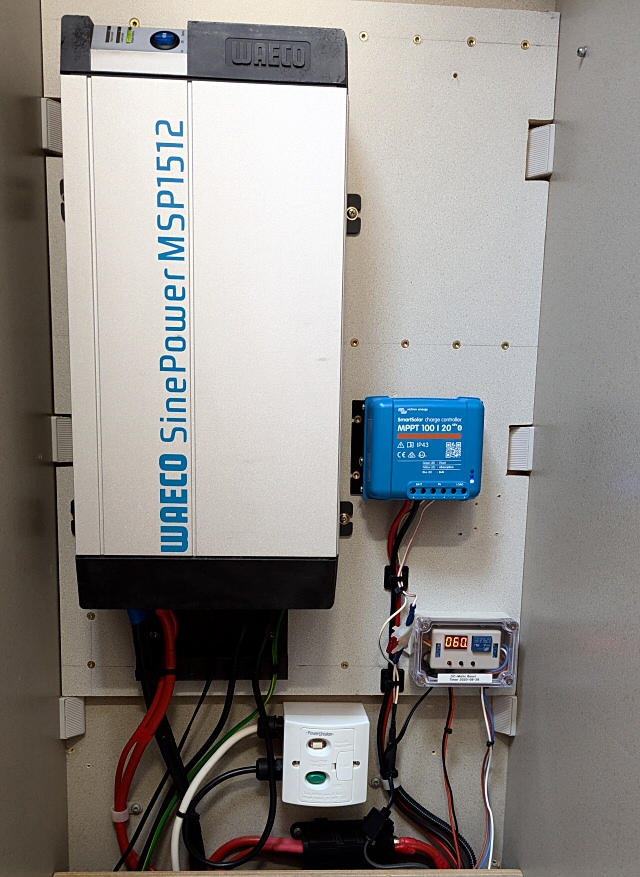
The leisure battery is also charged by 2 x 200W roof mounted solar panels via a Victron MPPT 100I20 Smart Solar Charge Controller.
The state of charge (SOC) of the leisure battery is monitored by a SmartGauge (this is a small algorithm based SOC meter that estimates the current SOC from measuring the exact battery voltage many times second and modelling the behavior of the battery. It is simple to use reasonable accurate and gets progressively better in use, it does not require any calibration, unlike many other battery SOC systems. Although the Calira Control Panel 843 does show voltage and current it is not particularly accurate and some devices are not monitored by it (the Inverter for example). (There is a spare Calira Control Panel 843 included) The SmartGuage gives you what you want and allows to ensure you do not take the gel battery below 50% routinely or 20% exceptionably.
The mains power distribution throughout the truck is UK standard 13 Amp sockets (of a type that can readily be re-fitted with European sockets if required). Mains input to the truck is via a Schaudt OVP 01 Mains Filter to avoid damage to sensitive mains powered equipment.
The truck has a Waeco SinePower MSP1512 12V to 230V pure sine power Inverter providing 1500 watts (there is a spare Waeco SinePower SP1500 inverter included, note this is not pure sine wave and that is the reason it was replaced, but it’s fine for boiling a 900 watt kettle).
In third world countries where mains power is available but limited to low current or very noisy or 110 volts it is possible to use the charger to charge the leisure battery and the sine wave inverter to power the habitation unit with clean 230 volt power.
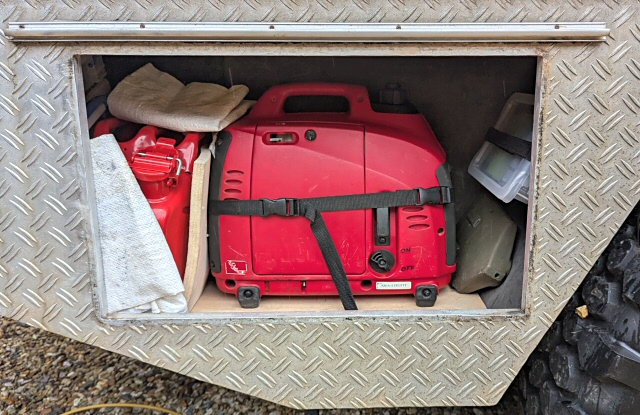
There is also a petrol (gas) fuelled Honda EU10i 900W Portable Inverter Generator stowed in an outside locker along with a red 10 litre Jerry Can that can effectively charge the leisure battery at 30 Amps via the normal mains charger. (If you want to wild camp in Iceland during winter (with no solar) you may need this.)
Water
The truck has a 400 litre fresh water tank under the bed with a lockable filler cap. There are two hose pipes for filling the fresh water tank (one short one long that can be joined together) and a variety of tap adaptors.
Water is pumped by a ShurFlo Whisper King pump of 10 litres per minute (it is not whisper quiet) with a ShurFlo Accumulator to stop frequent pump cycling. (There is a spare ShurFlo pump included).
The pump feeds cold water to the kitchen sink, the wash basin and the shower, and to the water heater via an isolating valve (that’s important).
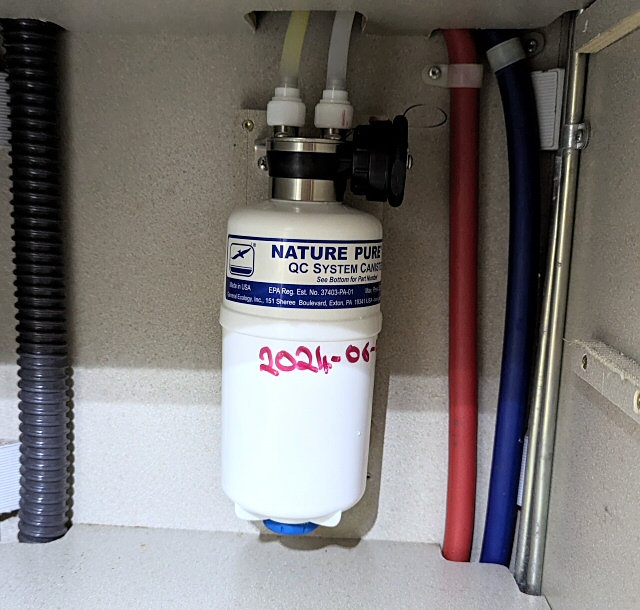
The kitchen sink has an additional Nature Pure QC2 filter with Tap. (There should be a spare tap and filter in one of the many spares boxes, but I need to check). In addition to this final under sink filter there is an external 10 micron hose pipe filter for use when taking on suspect water as well as a submersible pump with a long 24 volt (?) Power lead to allow water to sucked up from a stream or river (if you must!).
Grey water is held in a heated 200 litre tank under the rear bench seat. This tank can be emptied with a larger quarter turn tap accessible from the outside (or if really necessary from the inside). The grey water outlet discharges to the side of the vehicle and there are two dump hoses that can be attached, one short (2 metres) and one long (10 metres?).
In addition to the internal shower there is an external hot and cold shower head accessible from the side of the vehicle (only ever used for cleaning fish!).
Waste water from the shower is pumped (up) into the grey water tank by a Jabsco Shower Drain Pump-50880-1000 under the rear bench seat. (As you would by now expect there is a spare Jabsco Shower Drain Pump included).
Heating System
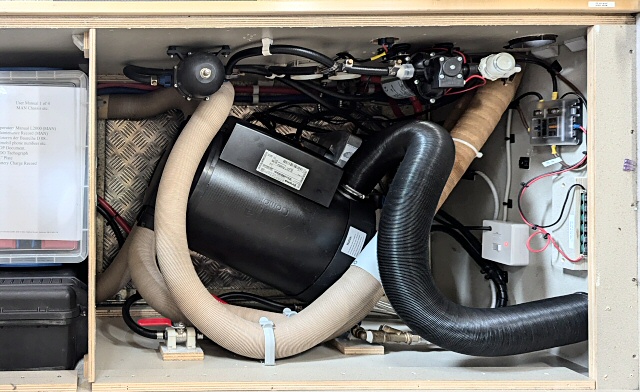
When originally supplied by Bimobil my EX480 had a Truma gas (Propane) heater. Because getting the right type of Propane cylinders (bottles) is difficult in many countries I removed this and installed a Webasto diesel heater. This finally gave up last year and I replaced it with a Truma Combi D6E Diesel Air and Water Heater under the front bench seat. This heater uses either diesel ( from the main tank or electricity (or both) to heat both water and air).
Hot water is supplied to the taps and shower pre-mixed to about 42C by a thermostatic mixer valve.
The heater is protected from freezing by a dump valve that empties the heater’s water if the internal temperature falls too low.
There are two carbon monoxide detectors one above the heater nearest to the external exhaust and one combined carbon monoxide and smoke detector by the bed.
Gas (Propane)
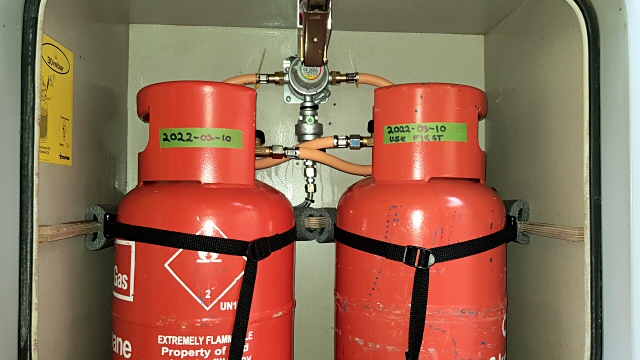
The truck is fitted with a vented externally accessible gas locker containing one or two propane cylinders (bottles). It was originally fitted with two German 11kg aluminium cylinders. When shipped (to Australia and Canada) all gas cylinders have to be removed and on arrival local ones fitted. Because of the flexibility of the regulator fitted (see below) this was no problem. Because gas is only used for the hob even a couple of 3 or 5kg cylinders will suffice for most six month trips.
The truck is currently fitted with two UK Red 6kg Calor Propane cylinders. The cylinder clamping system has been modified to fit these cylinders in such a way that it can easily be removed and larger cylinders reinstated if required.
The truck is now fitted with a Truma Duo Control CS 30Mbar regulator with built in automatic changeover and integrated crash sensing. (There is a spare Truma Duo Control CS regulator included). Each pig tail is fitted with an excess flow device that cuts off gas flow if it exceeds safe levels (e.g. a failed pipe) The current pigtails in use are for UK Calor propane cylinders and will need to be replaced next year, they have a ten year life) (There are several alternate pigtails in one of the spares boxes but they are likely to be passed their ten year limit.) Many types of pigtail are available from Truma and elsewhere.
Whilst it is recommended to turn gas of at the cylinder when travelling if you have both these devices fitted it seems to be legal to drive without doing so, at least in the UK.
Within the truck there is a Truma Duo Comfort L control which allows you to see which cylinder is in use and if necessary to heat the regulator to stop it icing up! I have never had to use this even above the Arctic Circle. I like to keep the spare cylinder turned off, not only is this safer but if you do run out of gas on one cylinder you find out more reliably than looking out for a small indicator light.
Spare Parts
If you have got this far through this description you will have realised I am big on carrying spare parts. My experience over the last 25 years of overlanding is that most problems that stop you enjoying your overland trip are not caused by your engine blowing up but by relatively minor habitation problems that you can’t fix because nobody in Mongolia stocks the ShurFlo pump you need.
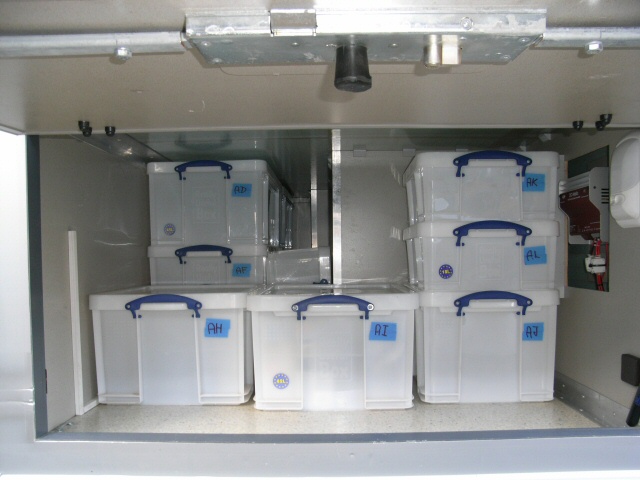
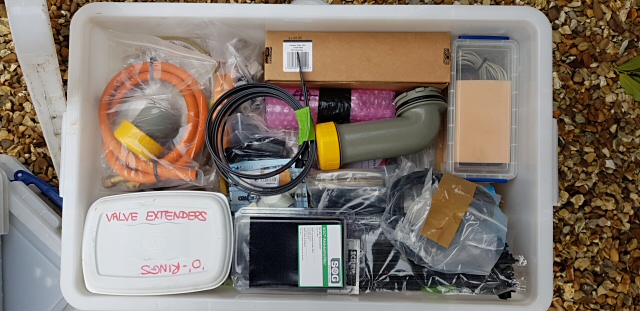
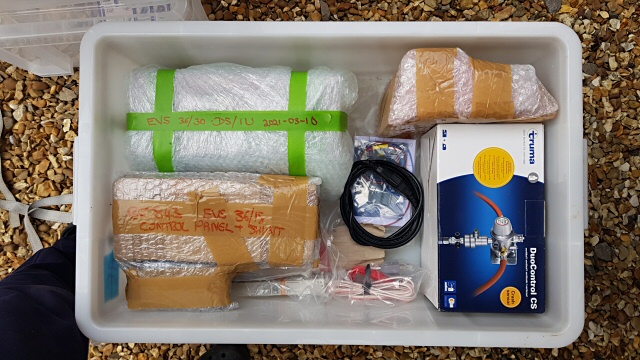
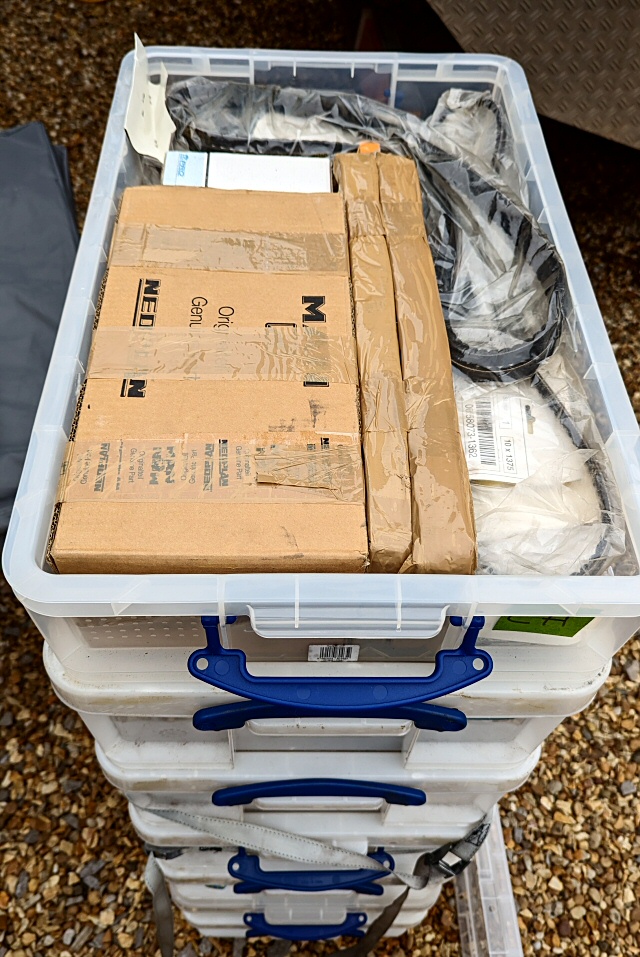
As a result this vehicle includes many large boxes of spares including things like a starter motor, fan belts, “O” rings for split rim wheels, wiper blades, bulbs, door catches, LED bulbs, valve extenders, all the major internal electrical bits, both the water pumps etc etc.
Documentation
There is a box containing four very large 4 ring A4 binders containing paper copies of the English instruction manuals for the truck and most of the habitation units equipment. In addition there are boxes of German language truck documentation, plus official German documentation about the truck before it was imported to the UK as well as documentation about its registration in the UK.
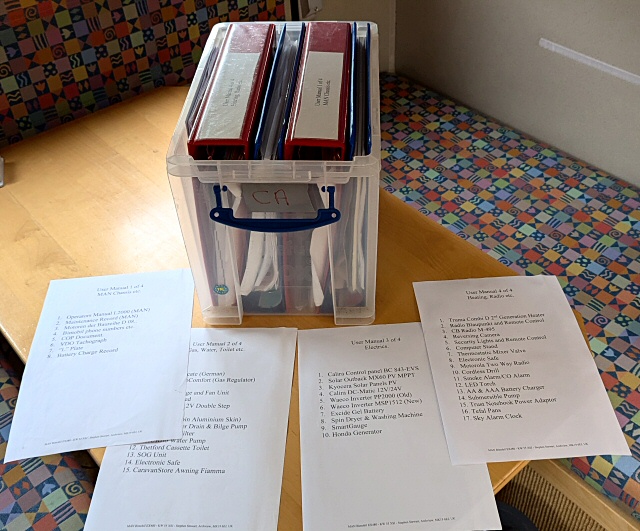
In addition to paper documentation, as far as possible I have collected PDF version of most of this documentation which will be supplied with the truck if required.
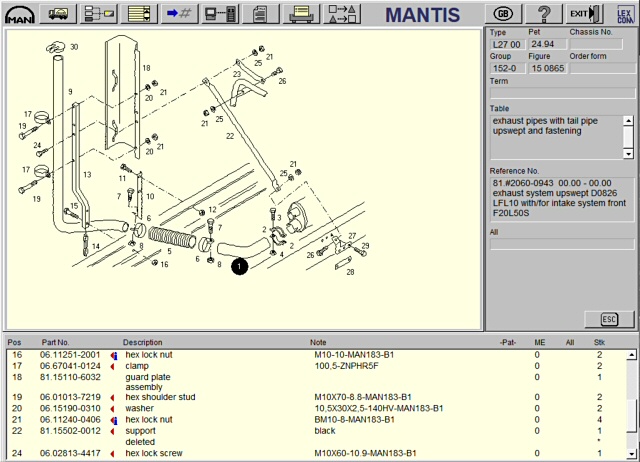
For very very detailed documentation about the truck, including the part numbers of the actual parts used to build this truck there is a CD “MANTIS KUNDEN-CD”. This software is quite difficult to use and a bit clunky as it requires the original CD to be mounted in a real CD drive. I have very occasionally used it under Windows 7 and 10 but I am not sure if it will work under Windows 11. The CD and necessary codes will be supplied with the truck.
I have documented the life of this truck in some detail (for example every litre of fuel used since 2008-07-23) and any relevant records will be available with the truck.
For more general information on designing and equipping this type of vehicle see here
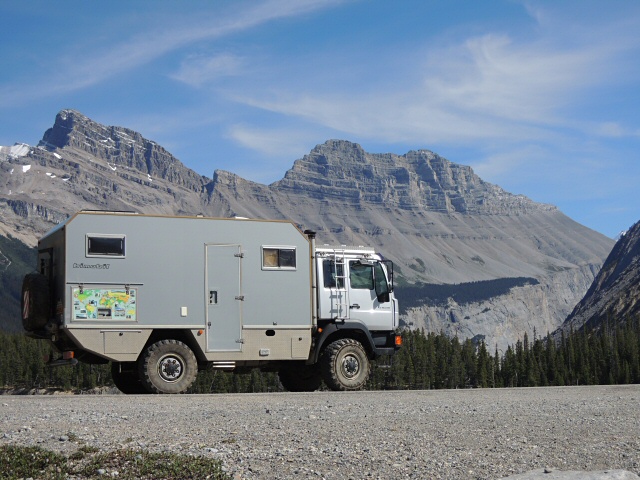
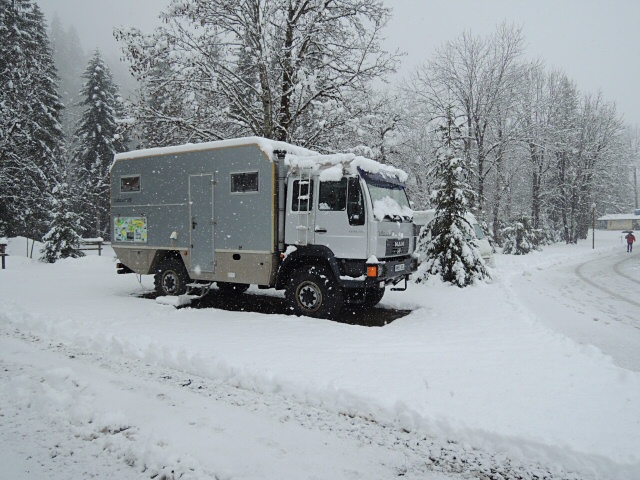
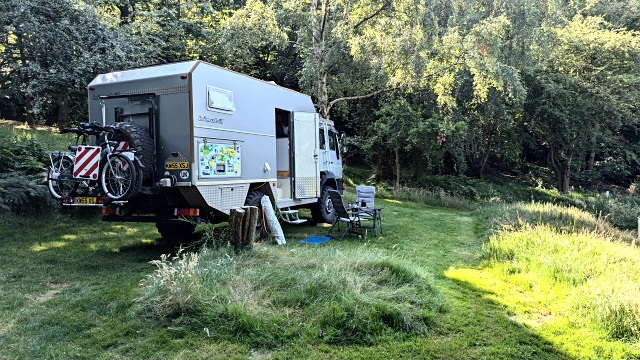
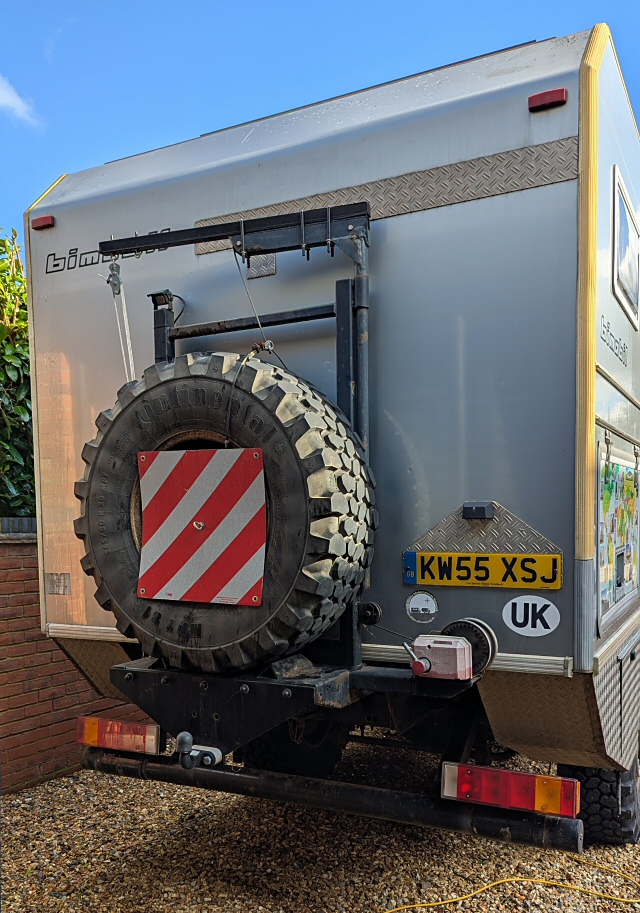
There is a 50mm towing ball on the rear of the vehicle for a suitable bike rack. Neither the rack nor the bikes are included.
For more general information on designing and equipping this type of vehicle see here
Misrepresentation Act: As I'm a private seller I don't know if the "Misrepresentation Act" act applies to me but anyway please note that these particulars are set out as a general outline for the guidance of intending purchasers and do not constitute part of a contract. All descriptions, dimensions, reference to condition and other details are given in good faith and are believed to be correct, but intending purchasers should not rely on them as statements or representation of fact, please satisfy yourself by inspection or otherwise as to the correctness of each item.